Custom Hoodie Guide 2026: Fabrics, Fits, Printing Methods & Costs
Published on 26/03/2026 by Xpromo Team• Hoodies, Zip Hoodies,
A complete guide to custom hoodies covering fabrics, fits, printing methods, and pricing-helping you choose the best option from budget merch to premium streetwear.
Custom hoodies have become one of the most powerful products in modern apparel. Whether you’re building a clothing brand, creating merchandise, or outfitting a team, hoodies offer something t-shirts often can’t: higher perceived value, better margins, and year-round wearability.
But not all hoodies are the same.
From lightweight promotional hoodies to heavyweight premium streetwear, your choices around fabric, fit, and printing method will directly impact how your product looks, feels, and sells.
This guide breaks down everything you need to know to choose the right custom hoodie in 2026.
Why Hoodies Are One of the Best Custom Apparel Investments
Hoodies consistently outperform other apparel for several reasons:
- Higher resale value → You can charge significantly more than t-shirts
- Longer wear lifecycle → People wear hoodies for years
- Seasonal versatility → Fall, winter, and even cool summer nights
- Premium brand perception → Feels more “valuable” instantly
👉 This makes hoodies one of the highest ROI products in custom apparel
Hoodie Fabrics Explained (The Foundation of Quality)
Cotton Hoodies
- Soft and breathable
- Ideal for comfort and everyday wear
- Works well with most printing methods
👉 Best for retail and lifestyle brands
Polyester Hoodies
- Durable and moisture-wicking
- Less prone to shrinking
- Common in performance wear
👉 Best for sports teams and activewear
Cotton-Poly Blends
- Balance of softness and durability
- Most popular option in custom printing
- Holds prints well over time
👉 Best all-around choice for most use cases
Fleece (Brushed Interior)
- Warm and soft inside
- Premium feel
- Often used in heavyweight hoodies
👉 Best for premium and winter apparel
Fabric Weight (GSM Breakdown)
- Lightweight (200-260 GSM): Budget, promotional use
- Midweight (260-320 GSM): Standard quality
- Heavyweight (320-500+ GSM): Premium, streetwear
👉 Heavier = more premium feel = higher perceived value
Hoodie Fits & Styles (What Actually Sells)
Pullover Hoodies
- Most popular style
- Clean and simple
- Great for branding
👉 Best for most custom orders
Zip-Up Hoodies
- More versatile
- Easier layering
- Slightly higher production cost
👉 Best for corporate and casual wear
Oversized / Streetwear Fit
- Trend-driven
- Boxy and relaxed
- Premium positioning
👉 Best for fashion brands
Athletic Fit Hoodies
- Slimmer cut
- Performance-focused
- Often used in gyms
👉 Best for fitness and sports brands
Printing Methods for Custom Hoodies
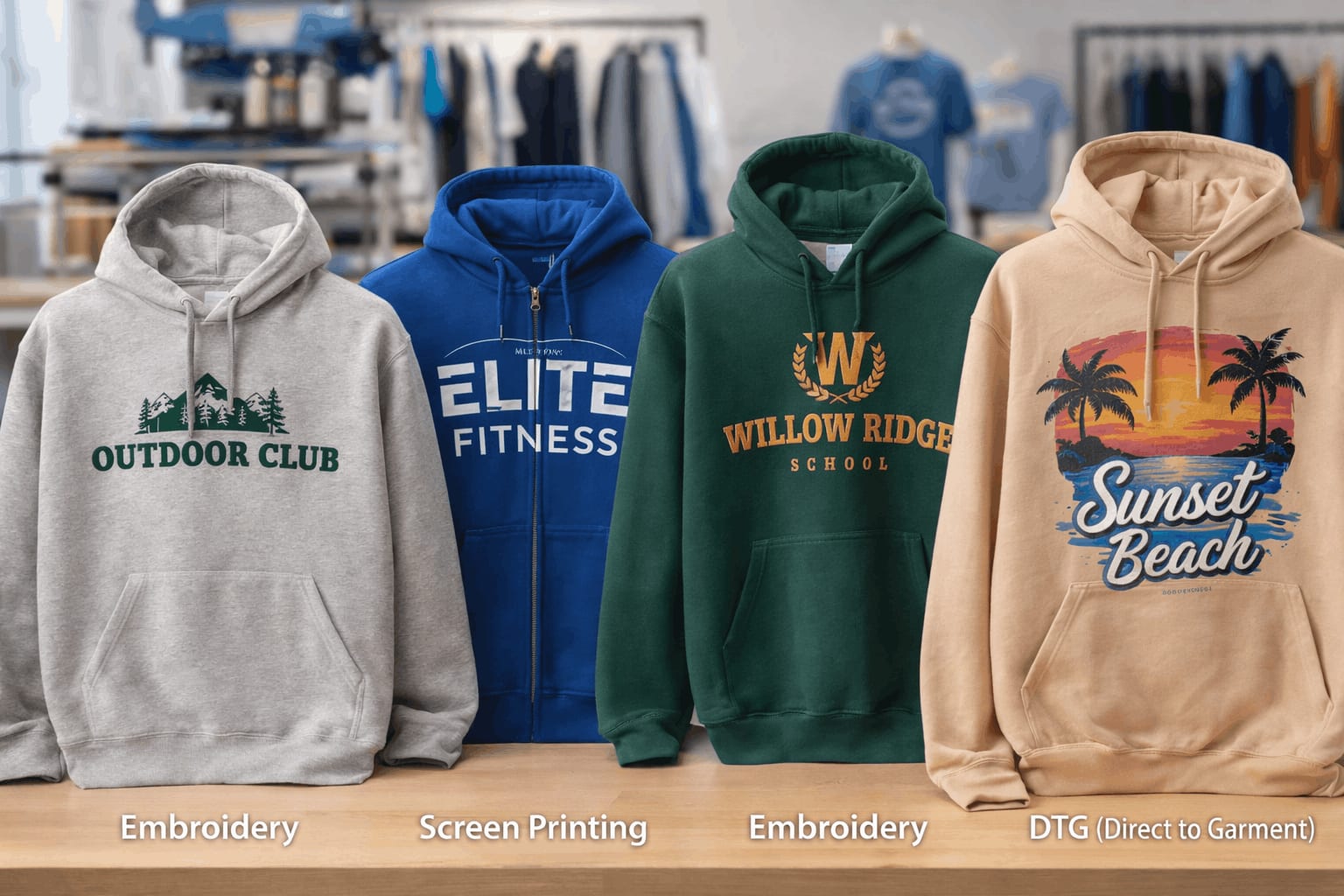
Screen Printing
- Best for bulk orders
- Durable and vibrant
- Cost-effective at scale
👉 Ideal for simple designs and large quantities
DTG (Direct to Garment)
- High detail and full color
- No minimum order
- Higher cost per unit
👉 Best for complex designs and small runs
DTF (Direct to Film)
- Works on most fabrics
- Flexible and durable
- Growing in popularity
👉 Great all-around solution
Embroidery
- Premium look and feel
- Extremely durable
- Limited to simpler designs
👉 Best for logos and high-end branding
Cost Breakdown: What to Expect
Budget Hoodies
- Lightweight fabrics
- Basic printing
- High quantity
👉 Lowest cost, lower perceived value
Mid-Range Hoodies
- Better fabric blends
- Improved print quality
- Balanced pricing
👉 Most common option
Premium Hoodies
- Heavyweight fabrics
- Embroidery or high-end prints
- Retail-quality
👉 Highest cost but highest ROI
How to Choose the Right Custom Hoodie
Step 1: Define Your Purpose
- Giveaway → budget
- Staff → mid-range
- Retail → premium
Step 2: Choose Fabric & Weight
- Lightweight → cost-focused
- Heavyweight → brand-focused
Step 3: Select Fit & Style
- Pullover → safe choice
- Oversized → trend-driven
- Zip-up → versatile
Step 4: Match Printing Method
- Bulk → screen printing
- Detail → DTG
- Premium → embroidery
Step 5: Think Long-Term
Will people wear it often?
👉 If yes → invest more
Common Mistakes to Avoid
- Choosing the cheapest option blindly
- Ignoring fit and audience
- Using the wrong printing method
- Not testing samples
Expert Tips to Maximize Hoodie Sales
- Go heavier for retail products
- Keep designs wearable, not overly branded
- Offer premium options to increase margins
- Focus on comfort and fit
FAQs
What is the best fabric for custom hoodies?
Cotton-poly blends are the most versatile, while heavyweight cotton fleece is best for premium hoodies.
What printing method works best on hoodies?
Screen printing is best for bulk, while embroidery offers a premium finish.
Are heavyweight hoodies worth it?
Yes. They provide better durability, comfort, and perceived value.
How much do custom hoodies cost?
Costs vary based on fabric, printing method, and quantity-from budget options to premium retail-quality hoodies.
What is the best hoodie for a clothing brand?
Heavyweight, oversized hoodies with high-quality prints or embroidery are ideal for branding.
Conclusion
Custom hoodies are one of the most valuable products you can offer-but only if you choose the right combination of fabric, fit, and printing method.
From budget-friendly options to premium streetwear pieces, the key is aligning your hoodie with your audience, purpose, and brand positioning.
👉 In 2026, the brands that win aren’t just printing logos-they’re creating products people actually want to wear.